Learning Objectives :
Students will be able to identify different types of mountains while learning more about Earth's systems.
Essential Questions :
What are the different types of mountains?
Estimated Time Required :
1 Class Period
Materials :
- Technology to play a short video
- Enough copies of the attached handout to give to students
- Writing Utensils
Directions :
Direct Instruction:
- Introduce Topic: Earth's Landscapes: Mountains
● What makes a mountain?
● Different types of mountains?
- Play a video that explains the difference between the four main types of mountains. This video is easy to follow along with but does not include information about how Plateau mountains are formed so that would need to be a separate discussion.
- Alternatively, the CT or L can read this article aloud. This article includes information about the different types of mountains as well as how they are formed.
Students may need assistance with words like "erosion," "plateau," and "plate tectonics"
Guided Practice:
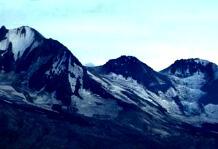
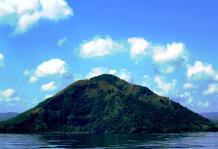
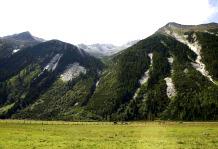
- The classroom teacher will pull up images of famous mountains and ask students to identify what type of mountain they are.
● Examples:
▪ The Black Hills of South Dakota (Dome)
▪ Harz Mountains of Germany (Block)
▪ Mount Kilimanjaro (Volcanic)
▪ Uluru (Plateau)
▪ The Andes (Fold)
- Visuals may be very useful. TC or L will explain features of the type of mountain and students will raise their hand to say which type of mountain they think it is.
Independent Practice:
- Students will complete the "What type of mountain is that?" handout.
● Students may work in groups.
- Students are encouraged to look at mountains near them and determine what type of mountain that is. The educator may need to assist them.
Closing / Sharing / Reflection
- Students will discuss what they've learned about mountains.
● Students will have handed in their worksheets for evaluation already.
● The CT or L can go over the answers with the class.
- Students who wish to learn more about mountains are encouraged to do so.
Assessment :
Students will complete the accompanying handout in order to test their skills when it comes to identifying different mountains. Students will hand the worksheet back to the teacher or librarian. The teacher or librarian can determine if the student achieved the learning outcomes based on their answers to the worksheet
Related Books :
Creator :
This lesson plan was written by Elizabeth Griffin.
Printables :
"Mountain Activity" Handout located under the 'Resources' tab on the right.
Standards :
Common Core Standard:
- RI.2.3. Describe the connection between a series of historical events, scientific ideas or concepts, or steps in technical procedures in a text.
IFC Skill:
Writes, draws, or verbalizes the main idea and supporting details (Standard 1)
Next Generation Science Standards:
- Cause and effect relationships are routinely identified. (3-PS2-1)
- Cause and effect relationships are routinely identified, tested, and used to explain change. (3-PS2-3)
- ESS1.C: The History of Planet Earth: Some events happen very quickly; others occur very slowly, over a time period much longer than one can observe. (2-ESS1- 1)
- ESS2.B: Plate Tectonics and Large-Scale System Interactions: Maps show where things are located. One can map the shapes and kinds of land and water in any area. (2-ESS2-2).